- care@vastumanojjain.com
- 26 Ram Vihar, Delhi-110092, IN

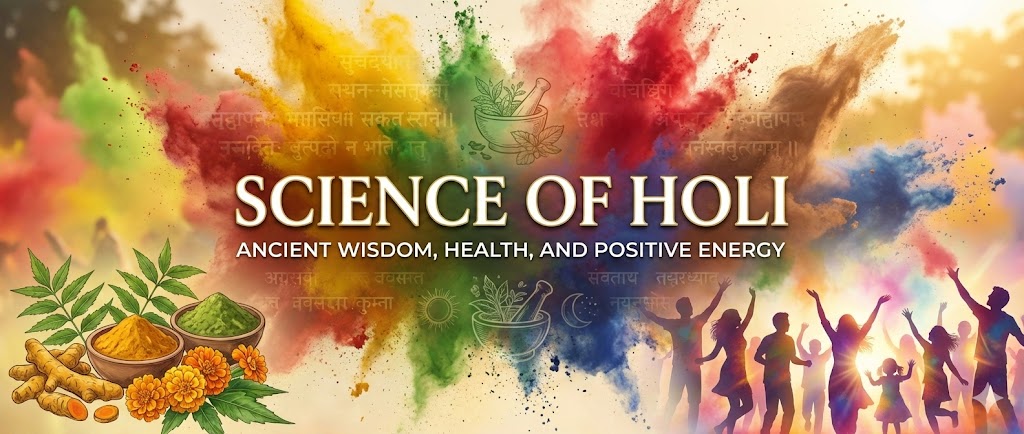
Science of Holi: Ancient Wisdom, Health, and Positive Energy
16
Feb
India’s cultural traditions are deeply rooted in observation, logic, and experiential knowledge. Many festivals of Sanatan Dharma are not merely symbolic rituals but reflect a refined understanding of nature, human psychology, and environmental balance. Holi, one of the most celebrated Indian festivals, beautifully illustrates the convergence of spirituality and science.
Seasonal Transition and Environmental Cleansing
Holi arrives at a crucial seasonal junction, the end of winter and the onset of spring. This climatic shift creates conditions conducive to the growth of bacteria, allergens, and pathogens. The ritual of Holika Dahan, involving a controlled sacred fire, carries practical environmental relevance.
The high temperature generated by the fire can help reduce microbial presence in the immediate surroundings. Traditionally, devotees perform parikrama (circumambulation), symbolizing purification. From a scientific perspective, heat has long been recognized as a natural disinfectant, reinforcing the festival’s association with cleansing and renewal.
Colours, Skin Stimulation, and Mental Well-Being
Holi’s vibrant colours are not just visual delights but also influence human physiology and psychology. Natural gulal and abir, historically derived from flowers and herbs, were believed to offer mild therapeutic benefits.
Biological and psychological studies indicate that colours affect mood, emotions, and cognitive states. Bright colours can stimulate sensory responses, elevate mood, and counter seasonal lethargy. Physical activity during Holi, dancing, laughter, social interaction, further enhances circulation and energy levels, helping reduce fatigue commonly associated with seasonal change.
Psychological Renewal and Emotional Detox
Colours have a profound impact on mental states. Exposure to diverse hues is often linked with emotional stimulation and positivity. Holi’s playful environment encourages social bonding, stress release, and emotional expression, elements strongly connected with psychological well-being.
Hygiene, Cleanliness, and Vastu Perspective
Preparations for Holi traditionally involve cleaning homes and surroundings. Beyond hygiene, this practice aligns closely with Vastu principles. Removing clutter, dust, and stagnant elements improves airflow, light, and energy movement within living spaces.
Clean environments reduce insects, allergens, and pollutants while also contributing to mental clarity and comfort. In Vastu philosophy, such cleansing supports positive vibrations and harmonious energy distribution.
The Deeper Scientific Insight
Holi’s customs reveal practical wisdom:
Fire ritual → Environmental and symbolic purification
Colours → Sensory stimulation and emotional upliftment
Celebration & movement → Increased vitality and social harmony
Cleaning rituals → Hygiene and energetic balance
Holi therefore represents far more than festivity it reflects an intuitive understanding of seasonal biology, environmental awareness, and human psychology.
Why Holi Still Matters Today
Modern science increasingly validates what ancient traditions intuitively practiced: the importance of environmental hygiene, psychological renewal, social bonding, and sensory stimulation. Holi embodies all these elements in a culturally meaningful framework.
By understanding the scientific dimension of Holi, we appreciate how Indian traditions integrate health, nature, and spirituality into everyday life.