- care@vastumanojjain.com
- 26 Ram Vihar, Delhi-110092, IN

Why Do We Ring Bells in Hindu Temples? Spiritual & Scientific Significance
12
Feb
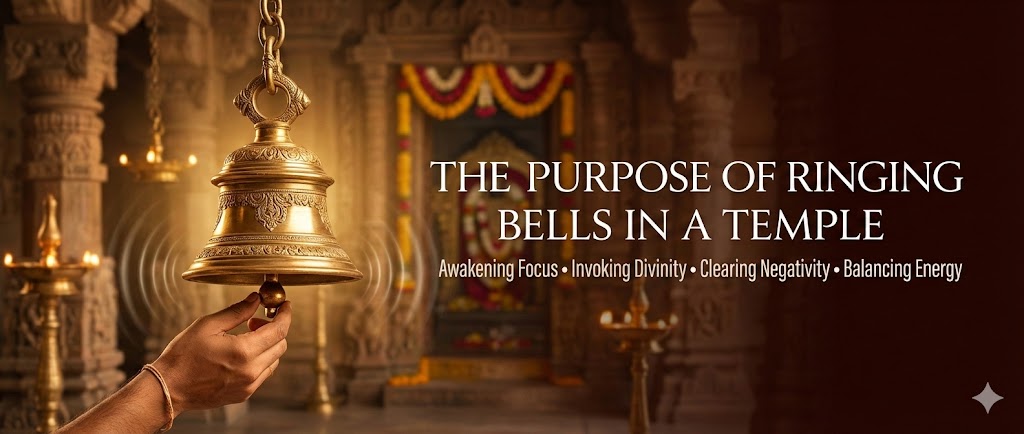
Ringing bells is an inseparable part of the Hindu temple experience. While many view it as a gesture of devotion meant to invite divine attention, this sacred practice also carries deep symbolic and scientific relevance. In Vedic tradition, sound is not merely heard it is experienced as energy capable of influencing both mind and environment.
Origin and Symbolism of Temple Bells
Ancient scriptures describe that when the universe manifested, the primordial vibration resembled the resonance of a ringing bell — akin to the sound of Om (Omkar). This cosmic association makes bells a symbolic reminder of creation, dissolution, and the eternal flow of time. Bells therefore represent awareness, purity, and alignment with higher consciousness.
In temple rituals, the bell’s tone serves a precise purpose: it draws the mind away from distractions and anchors attention in the present moment. The instant the bell rings, mental chatter pauses preparing the devotee for prayer, meditation, and spiritual receptivity.
Scientific Perspective: Sound, Vibration & Environment
From a scientific standpoint, bells generate structured sound frequencies and vibrational waves. Research on acoustic resonance suggests that such vibrations can travel across considerable distances, subtly affecting the surrounding atmosphere. Traditional belief systems hold that these frequencies help cleanse the space by reducing stagnant or discordant energies.
This principle explains why similar sound tools like wind chimes are widely recommended in Vastu applications. Harmonious sound patterns are believed to promote balance, clarity, and emotional calmness within living spaces.
Psychological & Energetic Effects
Sound therapy and psychological studies consistently affirm that soothing, rhythmic sounds positively influence human emotions. The tonal quality of temple bells is particularly effective in stabilizing mental states, reducing stress, and fostering inner stillness.
Some spiritual traditions state that a bell’s resonance sustains long enough to stimulate the body’s seven primary energy centres (chakras), encouraging relaxation and cognitive reset. This may explain the immediate sense of serenity many individuals feel upon entering temple premises.
The Deeper Purpose of Ringing Bells
Far beyond ritual, ringing a bell acts as a transition signal from worldly activity to sacred awareness. It harmonizes attention, environment, and intention. Whether viewed through spirituality, psychology, or vibrational science, the practice converges on one outcome: mental clarity and energetic refinement.
For deeper insights into Vastu, energy harmonization, and ancient Indic wisdom, explore expert guidance at Vastumanojjain.com, where traditional knowledge meets practical application.