- care@vastumanojjain.com
- 26 Ram Vihar, Delhi-110092, IN

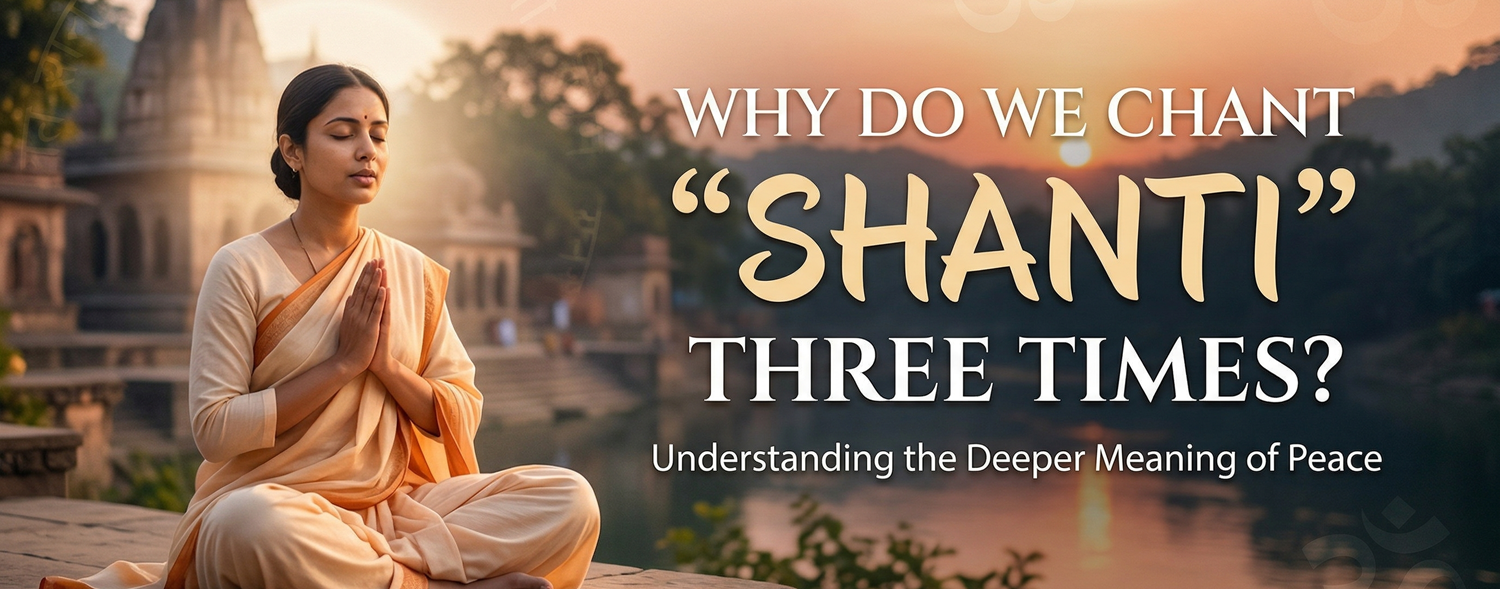
Why Do We Chant “Shanti” Three Times?
09
Apr
Understanding the True Meaning of Peace
Peace and harmony are not luxuries, they are the natural state of both nature and human life. Wherever there is peace, happiness naturally follows.
Yet, many people who seem to have everything, success, wealth, recognition, and good health, still feel restless and dissatisfied.
This happens because peace exists in two forms:
External Peace – connected to our environment and circumstances
Internal Peace – related to our thoughts, emotions, and inner state
A person may achieve material success but still lack inner calm. True peace must be cultivated within, it does not automatically come with worldly achievements.
The Three Sources of Disturbance in Life
Ancient Indian sages studied the human mind and identified three primary sources that disturb our peace:
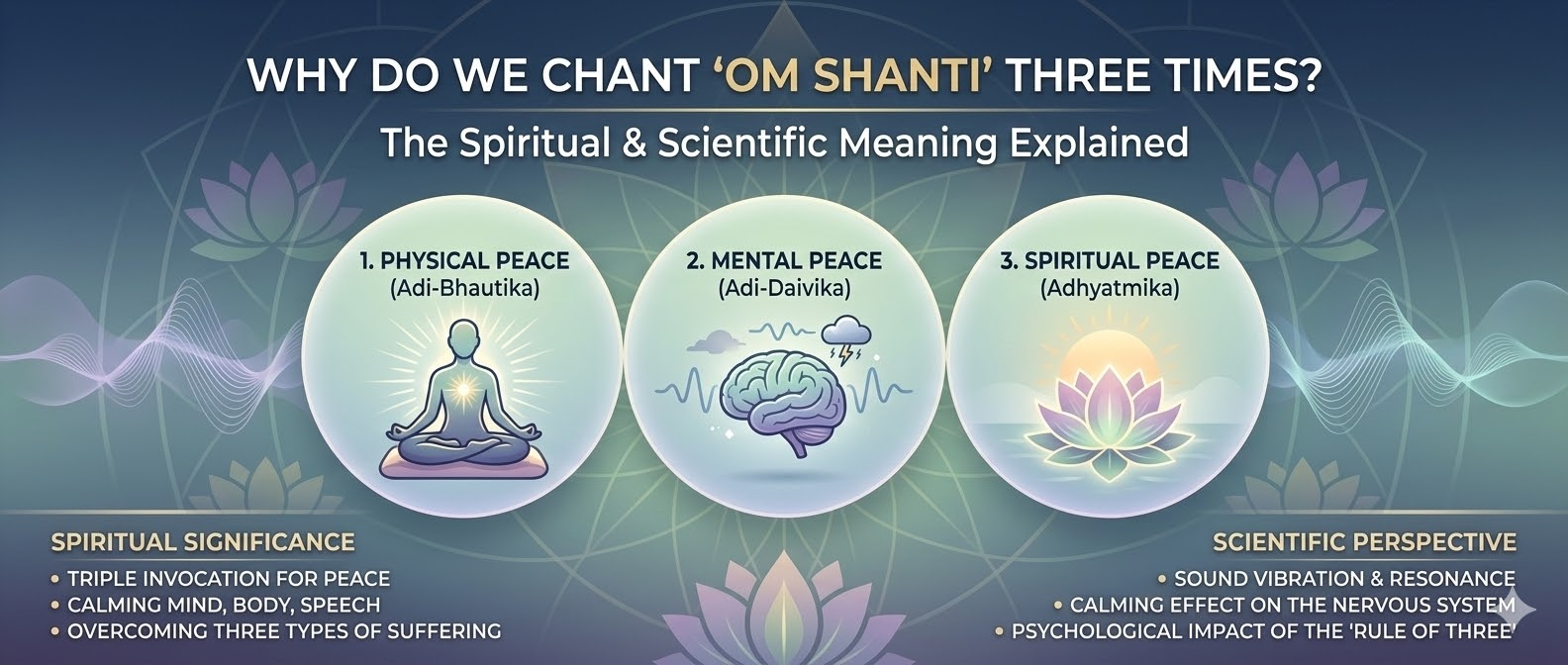
1. Divine or Natural Forces (Adhidaivik)
These are forces beyond human control, such as earthquakes, floods, storms, and other natural calamities. They create fear and uncertainty, affecting our mental balance.
2. External and Social Factors (Adhibhautik)
There arise from the world around us, including conflicts, unhealthy relationships, accidents, crimes, and emotions like jealousy, anger, and desire. These directly impact our day-to-day peace.
3. Internal or Spiritual Causes (Adhyatmik)
These are the deepest sources of disturbance:
Past karmas (actions from previous lives)
Inner fears and unresolved emotions
Mental and spiritual imbalances
The Power of Repetition: Why Three Times?
Ancient wisdom speaks of “Trivaram Satyam”
“That which is spoken sincerely three times becomes true.”
Even today, repetition is used to emphasize truth and intention. For example:
In court: “the truth, the whole truth, and nothing but the truth”
In Islamic tradition, the word “talaq” is repeated three times for finality
Similarly, chanting “Shanti” three times carries deep significance.
Why We Chant “Shanti” Three Times
When we say:
“Om Shanti, Shanti, Shanti…”
each repetition has a specific purpose:
1. First “Shanti” (Loud)
Directed towards divine and natural forces, seeking protection from disturbances beyond our control.
2. Second “Shanti” (Softer)
Aimed at our surroundings and people around us, promoting harmony in relationships and environment.
3. Third “Shanti” (Softest)
Meant for our inner self, helping release stress, fears, and karmic burdens.
Conclusion: A Simple Chant, A Deep Meaning
Chanting “Shanti” three times is not just a ritual, it is a structured approach to restoring balance in life.
It addresses:
The world beyond us
The world around us
The world within us
By chanting mindfully, we gradually move closer to true and lasting peace.